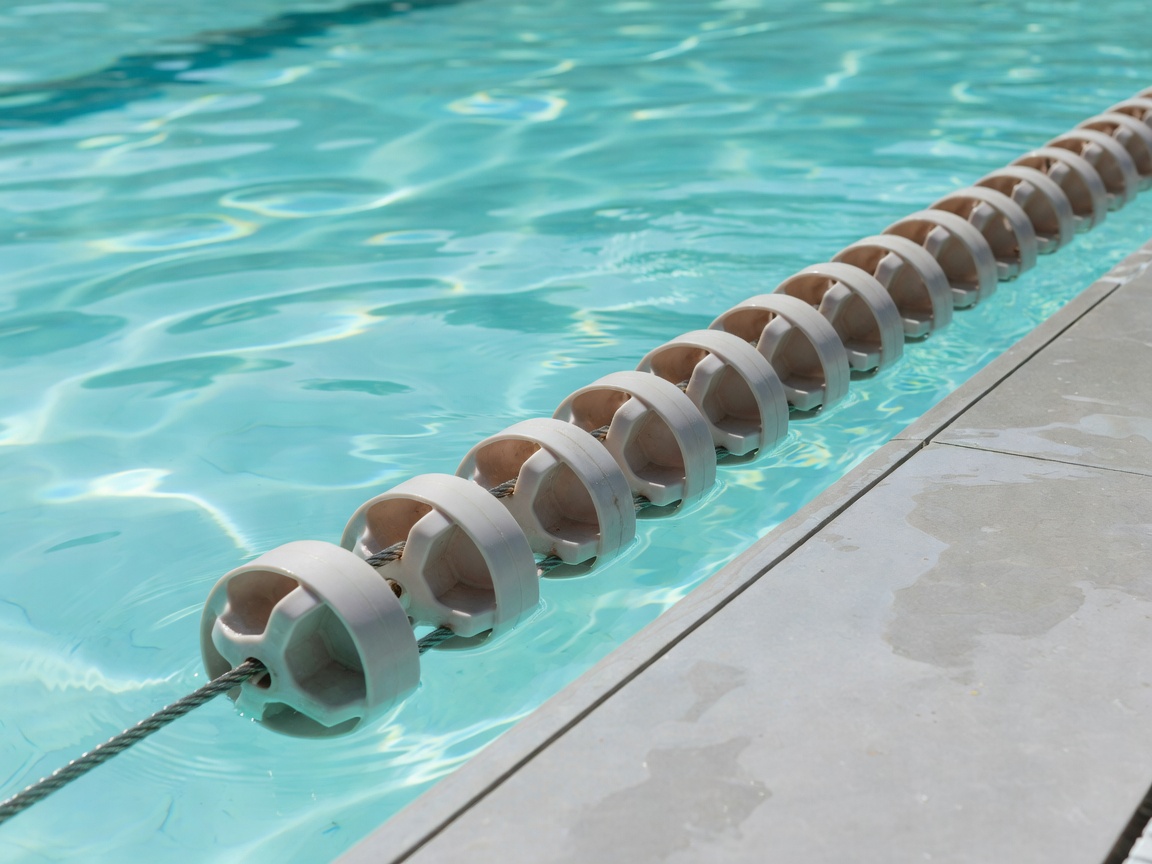
A pool beside a track looks like an obvious advantage for modern pentathlon. Yet athletes experience a sequence of tasks, not an aerial photograph. They arrive, gain access, change, find a lane, leave the water, dry, collect equipment and move onwards. If any of those steps is unreliable, a compact site can still produce a fragmented day. Assessing the link begins with the actual route and the actual booking agreement.
Define the swimming provision
Record what the programme can use: the available pool configuration, allocated lanes, booking times, entry arrangements and any restrictions on equipment or coaching. A public timetable is not a guaranteed training allocation. Ask what happens during school bookings, maintenance closures and events. Where access depends on a partner operator, the relationship should be documented rather than assumed from a friendly conversation.
The senior pentathlon swim is associated with a 200-metre event, but that fact alone does not specify a training pool. Starts, turns, timing practice and group management introduce further requirements. Confirm the current UIPM rules and the intended level of rehearsal. World Aquatics publishes swimming rules and facility material, but swimming-specific references must be applied alongside the relevant pentathlon requirements and local operating conditions.
Separate safety from convenience
A useful assessment distinguishes programme coaching from the pool operator’s safety responsibilities. Who authorises use? Which supervision arrangements apply? What happens if an athlete feels unwell, a lane becomes unavailable or a session ends early? These questions need explicit answers from the responsible professionals. This guide is not a pool risk assessment, a lifeguarding specification or advice on whether a particular athlete should enter the water.
Water quality, ventilation, cleaning and changing facilities belong in the operational picture. A programme may not control those systems, but it should know how concerns are reported and how closures are communicated. The World Health Organization’s recreational-water guidance offers wider public-health context. It does not certify a particular venue, and it should not be reduced to a checklist that an athlete is expected to enforce.
Make the wet-to-dry transition ordinary
Walk from the pool exit to the next activity while considering wet footwear, towels, bags and personal privacy. Can wet kit be contained without entering a fencing preparation area? Is there enough usable changing capacity when another group finishes? Are routes legible to a first-time visitor? An accessible path that is routinely blocked by laundry or stored equipment is not a dependable connection.
Changing and circulation should support different users without forcing them to disclose personal circumstances in a public queue. Consider step-free routes, clear signage, suitable facilities and a way to request assistance. Use appropriate local accessibility requirements and competent design advice. A planner’s task is to identify barriers and assign responsibility for resolving them, not to infer that all athletes use the site in the same way.
Understand the running environment
Running provision may include a track, an outdoor loop, an indoor route or access to a suitable off-site venue. Each option creates a different operating agreement. Identify surfaces, crossings, lighting, public use, opening hours and weather exposure. A route measured for ordinary practice is not automatically a certified race course. World Athletics technical and facility resources provide context, but pentathlon event layouts still require their own applicable specifications.
Consider how equipment and supervision reach the running area. A route that is simple for a runner may be awkward for staff moving targets, communication equipment or first-aid supplies. Outdoor plans also need a process for darkness, ice, heat or other adverse conditions. The decision to change or stop an activity belongs to the responsible people using local conditions and relevant policies, not to a generic website threshold.
Evaluate reliability before elegance
Compare co-located access with a well-managed partnership honestly. A dependable off-site pool may support a programme better than an on-site pool whose lanes are rarely available. Travel still requires time, transport arrangements and contingency planning; it is not free simply because it appears outside the training timetable. Record those demands visibly so that the programme does not quietly transfer the burden to athletes.
The strongest pool-and-running link has a named contact on each side, an achievable changeover and a clear response to disruption. Test it at the busiest hour. If the route remains understandable, the booking remains usable and the athlete can arrive prepared, the connection is doing useful work. That is a more meaningful measure of integration than the distance between two doors.
Dated source notes and further reading
Context prepared 6 February 2026; use current rule editions and local operating requirements.
- UIPM rules and regulations — pentathlon swimming and event requirements.
- World Aquatics rules — swimming and facilities context.
- World Athletics technical information — track and field facility references.
- World Health Organization: Guidelines on recreational water quality, Volume 1 — public-health context, published in 2021.
- Sport England design and cost guidance — useful facility-planning references, not Finnish statutory requirements.